
Articles

Long-form guides for students: what each method really measures, the equations, numbers to check yourself and the assumptions that break.

PHYSIOLOGY · STUDENT GUIDE

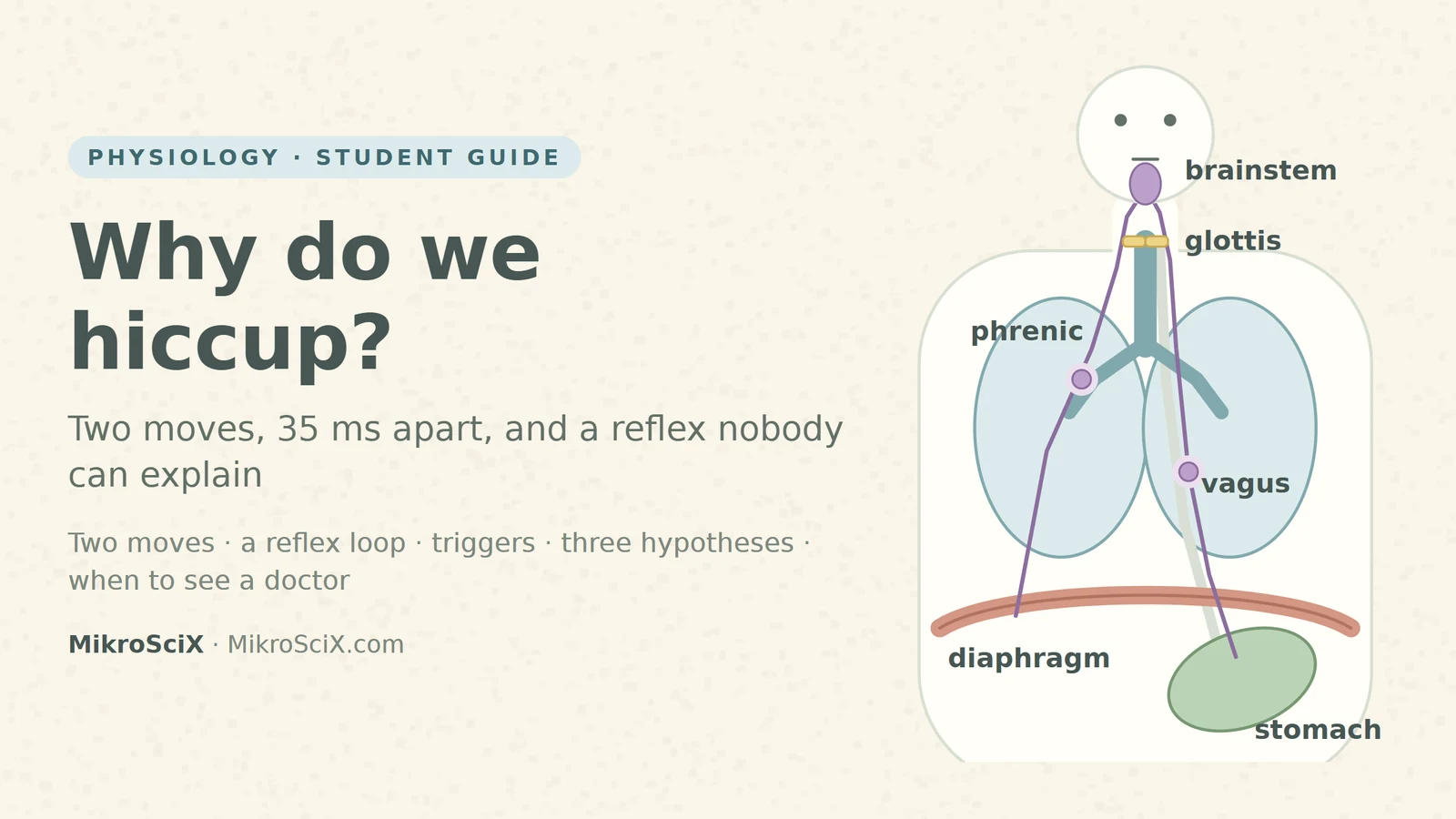
Why do we hiccup? Two moves, 35 milliseconds apart

A hiccup is not one event but two: a sudden pull of the diaphragm, then a slam of the vocal cords about 35 milliseconds later. What drives the rhythm, what sets it off, why nobody knows what it is for, and why home remedies and long-lasting hiccups deserve a careful look. For undergraduate and graduate students. Not medical advice.

2026-11-12 · 7 min read

HEALTH · ANIMAL PHYSIOLOGY

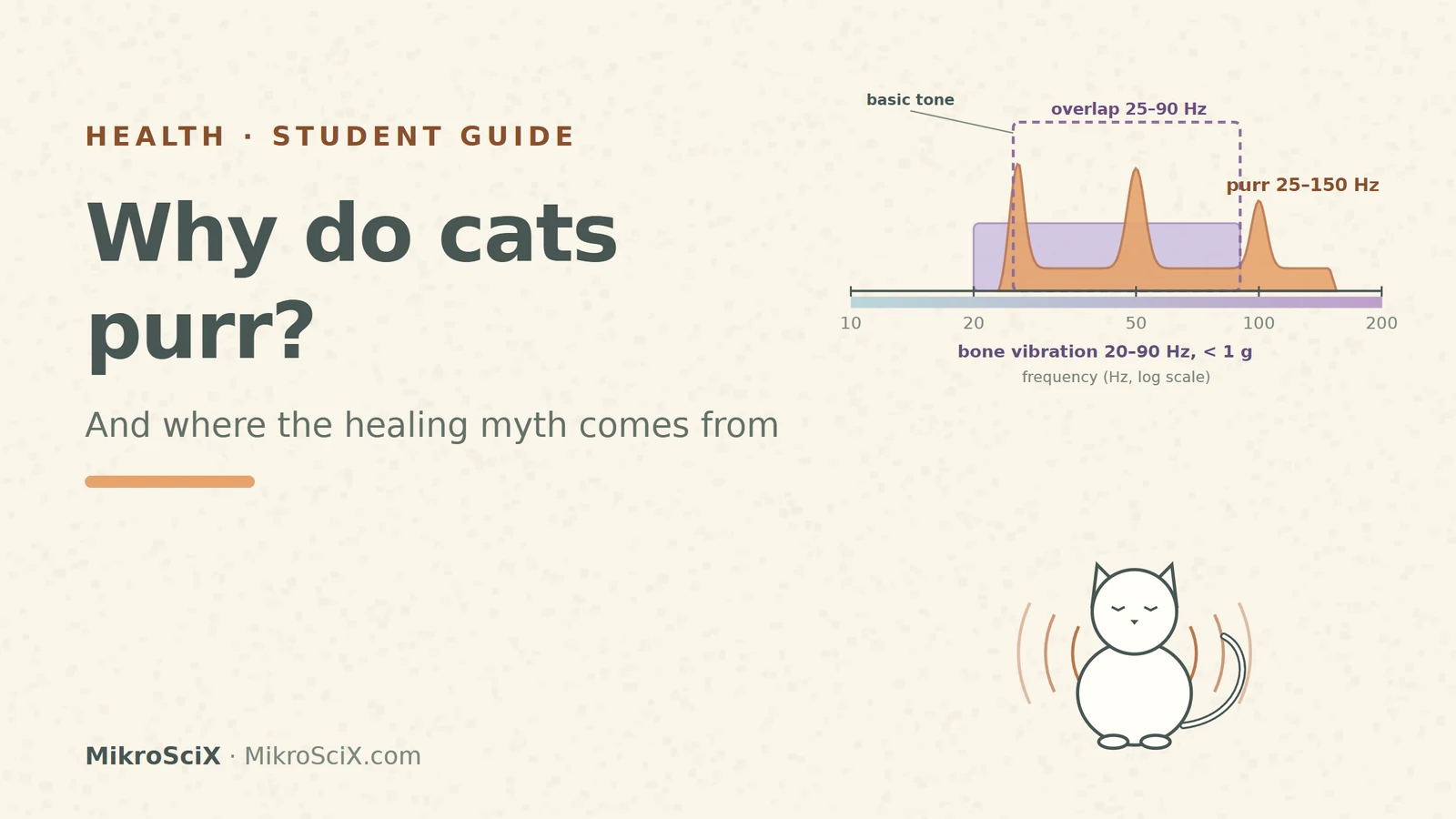
Why cats purr, and where the 'purring heals bones' idea comes from

A purr is the larynx buzzing about 25 times a second. Cats purr when they are content, but also when they are hurt or frightened. And the popular claim that purring heals bones rests on a matching number, not on a healing study. The mechanism, the evidence and how to read a health claim. For undergraduate and graduate students.

2026-11-12 · 8 min read

ANIMAL BEHAVIOUR

Why do dogs eat grass? What surveys of 1,571 dogs actually found, and what is still unknown

Almost every dog eats grass, and the usual explanation is that it feels sick and wants to vomit. The largest owner survey says otherwise: only 8 % of plant-eating dogs often looked ill beforehand and only 22 % regularly vomited afterwards. Here is what the studies measured, what they did not, and when grass eating deserves attention.

2026-11-12 · 8 min read

PHYSICS · ASTRONOMY

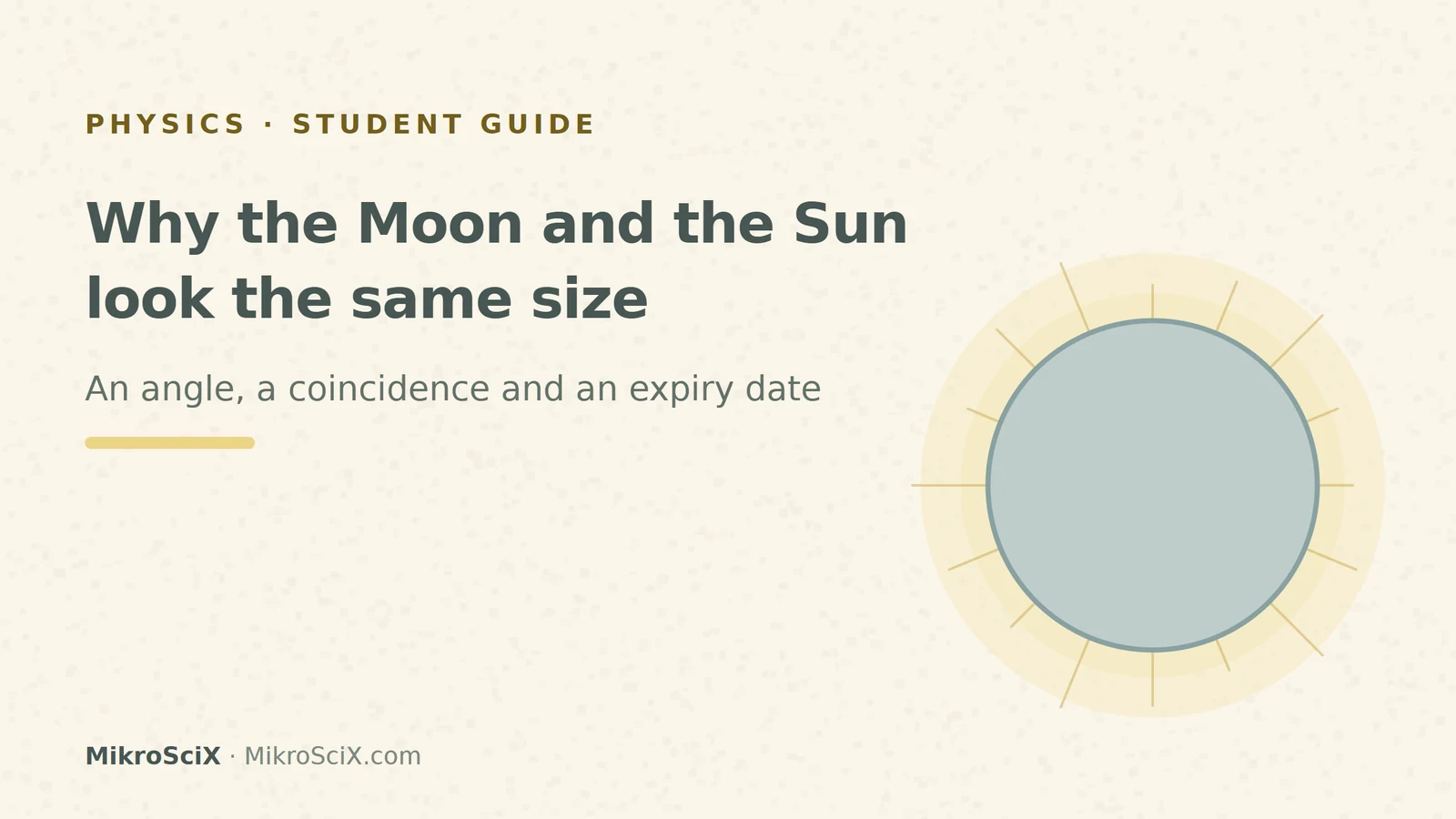
Why the Moon and the Sun look the same size, and why it won't last

The Sun is about 400 times wider than the Moon and about 400 times farther away. The two factors cancel, so both span about half a degree in our sky. Here is the arithmetic, what it means for eclipses, and why total eclipses have an expiry date. For undergraduate and graduate students.

2026-11-11 · 6 min read

THIN-FILM DEPOSITION

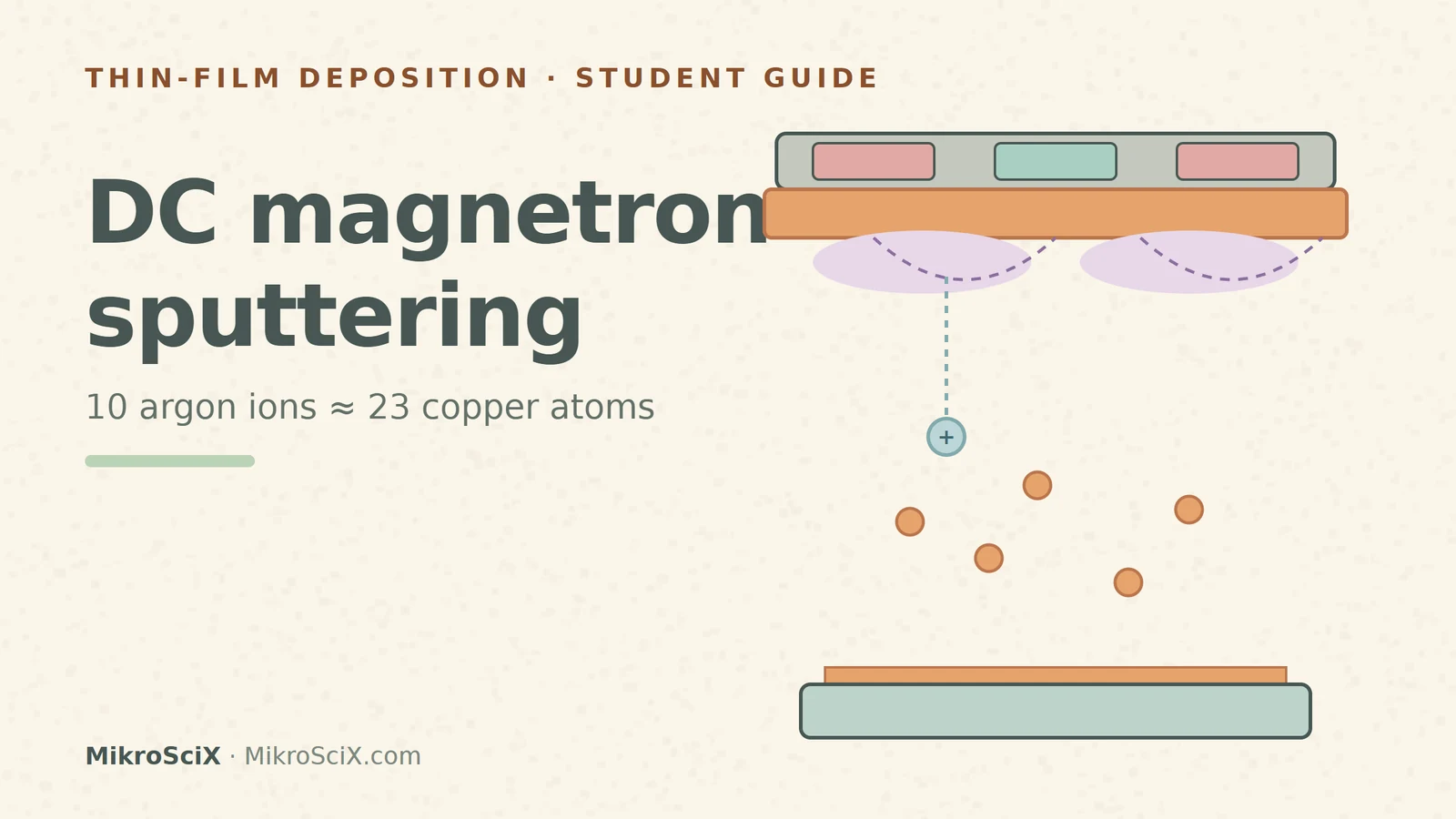
DC magnetron sputtering: how one argon ion builds a metal film

Vacuum, argon, electrons, magnets and ion hits: what each step does, the numbers behind it, a worked example you can check yourself, and the one target that DC cannot sputter. For undergraduate and graduate students.

2026-11-10 · 6 min read

ASTRONOMY · METEOR SHOWERS

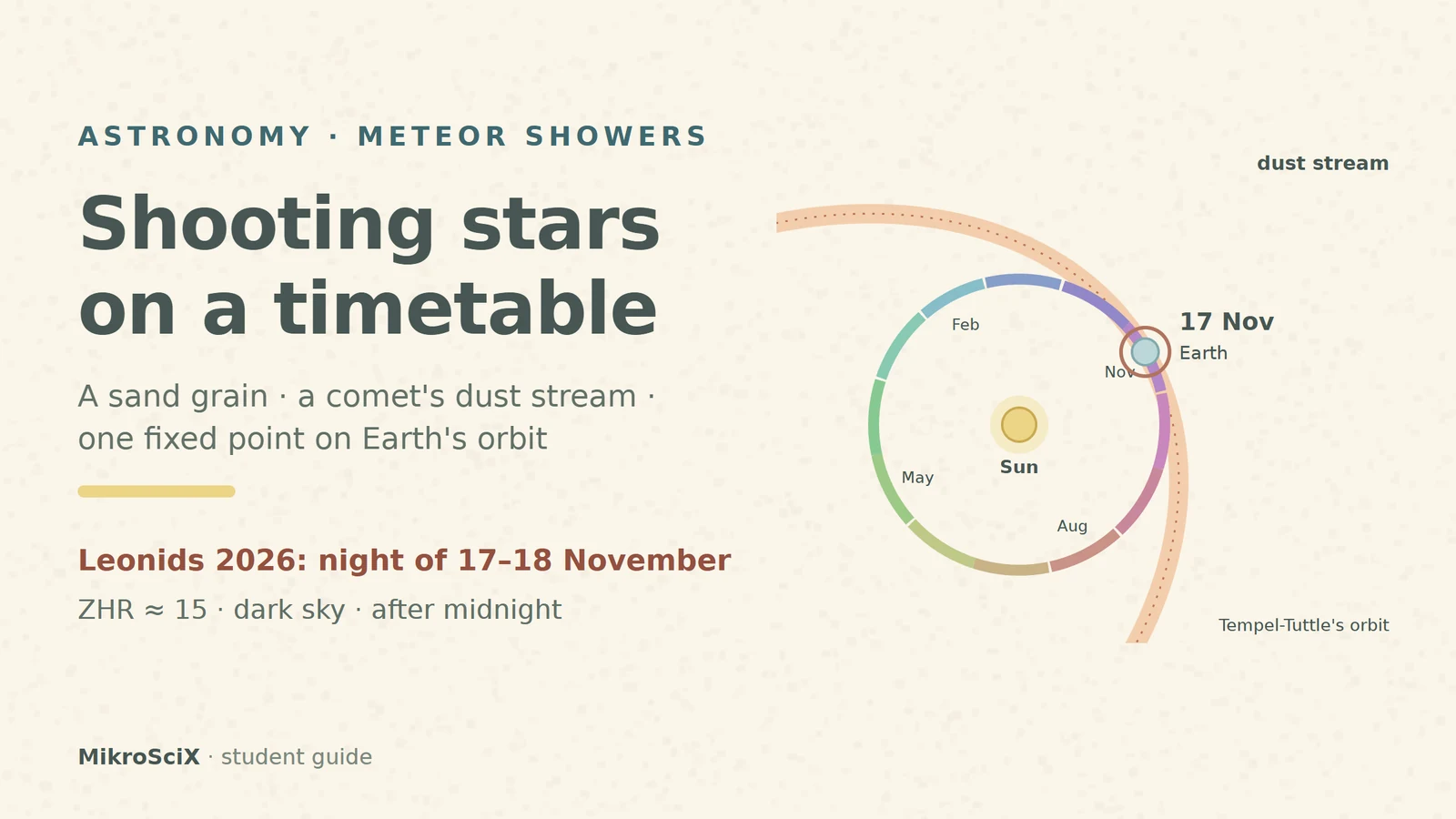
Shooting stars on a timetable: why the Leonids return every November

A shooting star is a sand grain, a meteor shower is a comet's dust stream, and the date is fixed by where Earth is on its orbit. With the numbers for the 17–18 November 2026 peak, a rate formula you can use yourself and how to watch. For students and curious observers.

2026-11-10 · 7 min read

PHYSICS · GRAVITY AND ORBITS

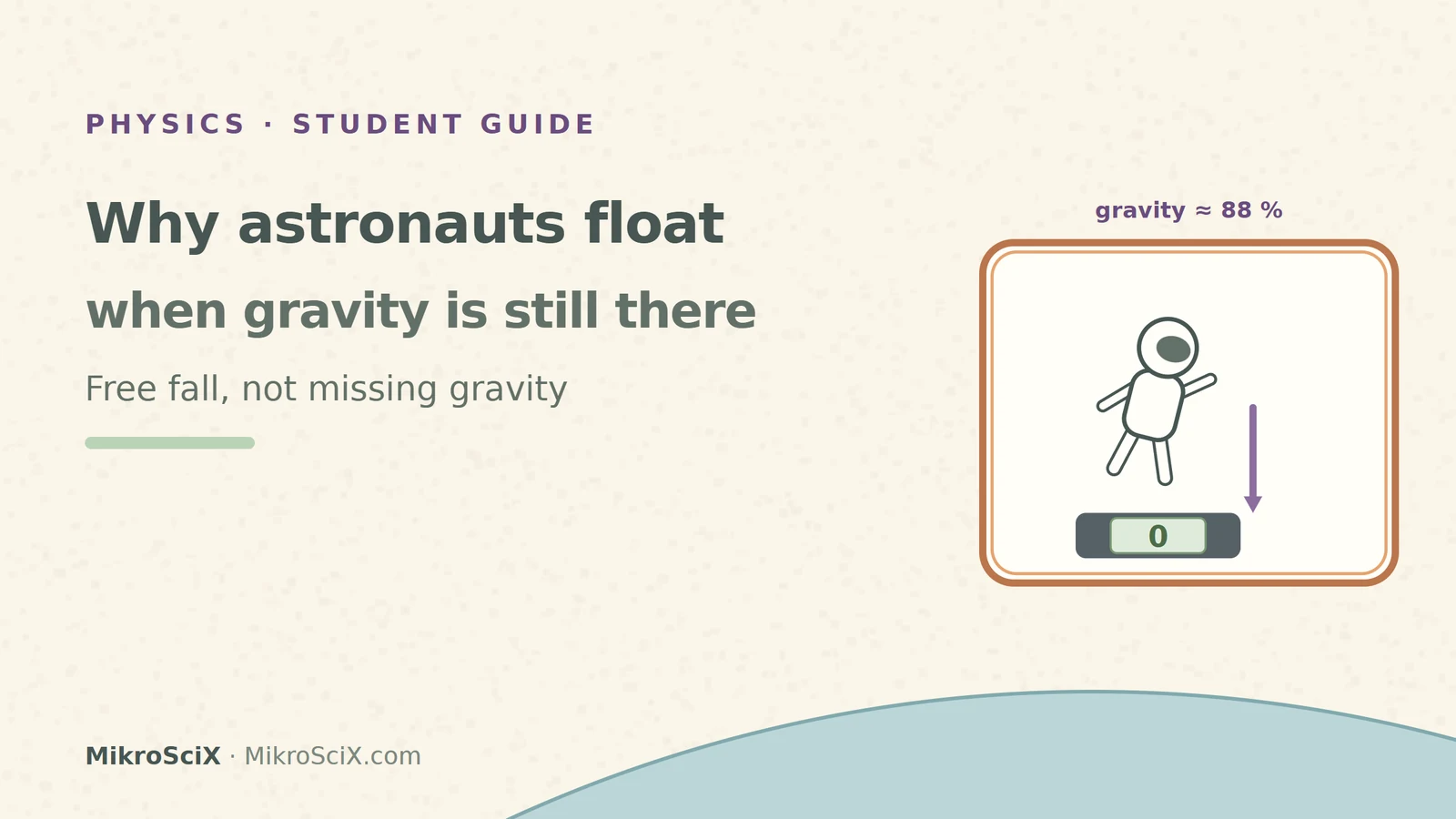
Why astronauts float when gravity is still 90 % as strong

Gravity does not switch off in orbit. Astronauts float because they, their spacecraft and everything inside are falling together. The numbers, the mechanism, and the word that misleads almost everyone. For undergraduate and graduate students.

2026-11-10 · 7 min read

SOLAR PHYSICS · STUDENT GUIDE

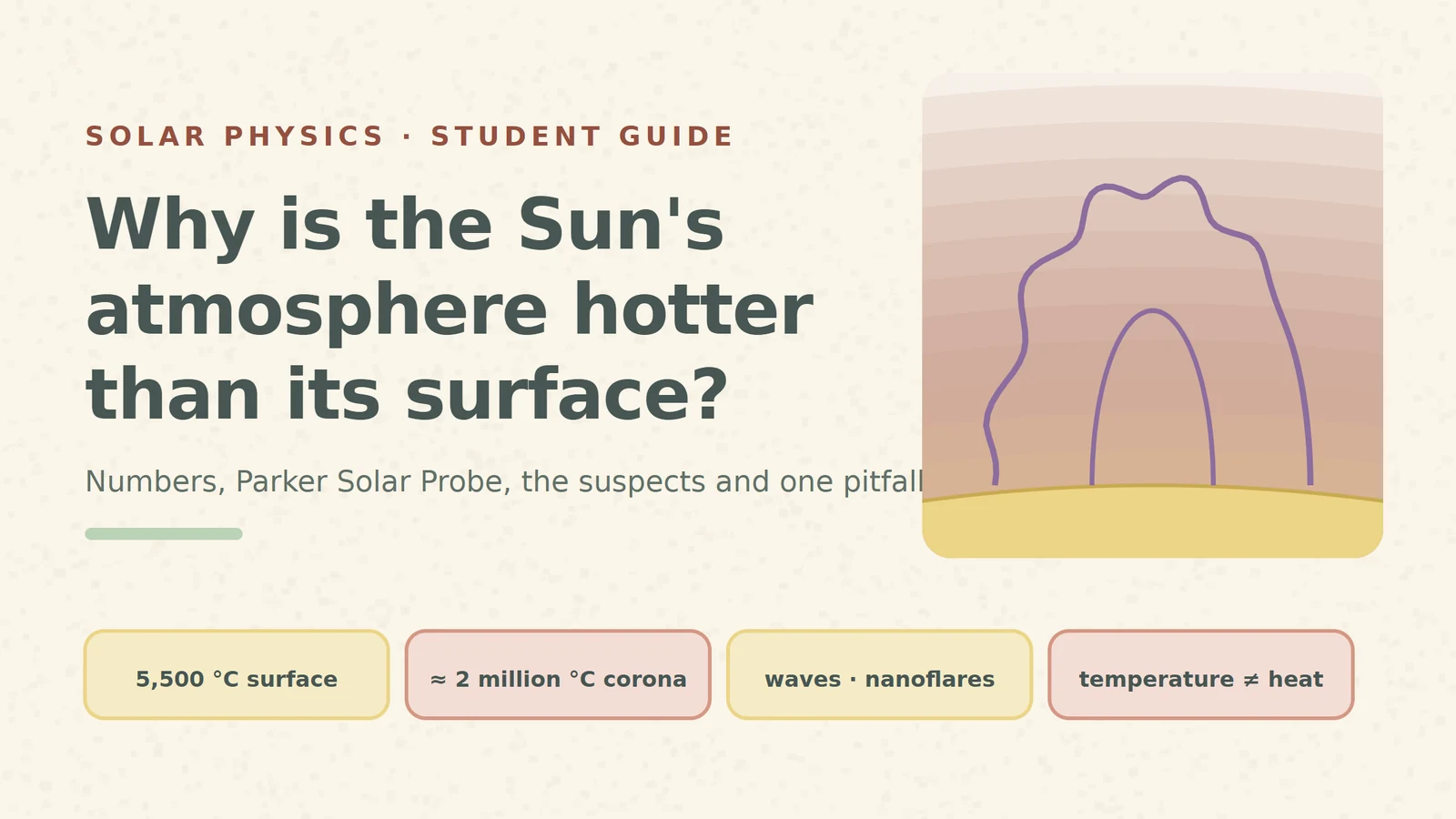
Why is the Sun's atmosphere hotter than its surface?

The Sun's surface is about 5,500 °C, yet the thin corona above it reaches about two million degrees. What we know, what Parker Solar Probe measures from inside, the two classic suspects, the 2026 dust idea, and why the probe does not melt. For undergraduate and graduate students.

2026-11-10 · 7 min read

MATHEMATICS · POPULATION · STUDENT GUIDE

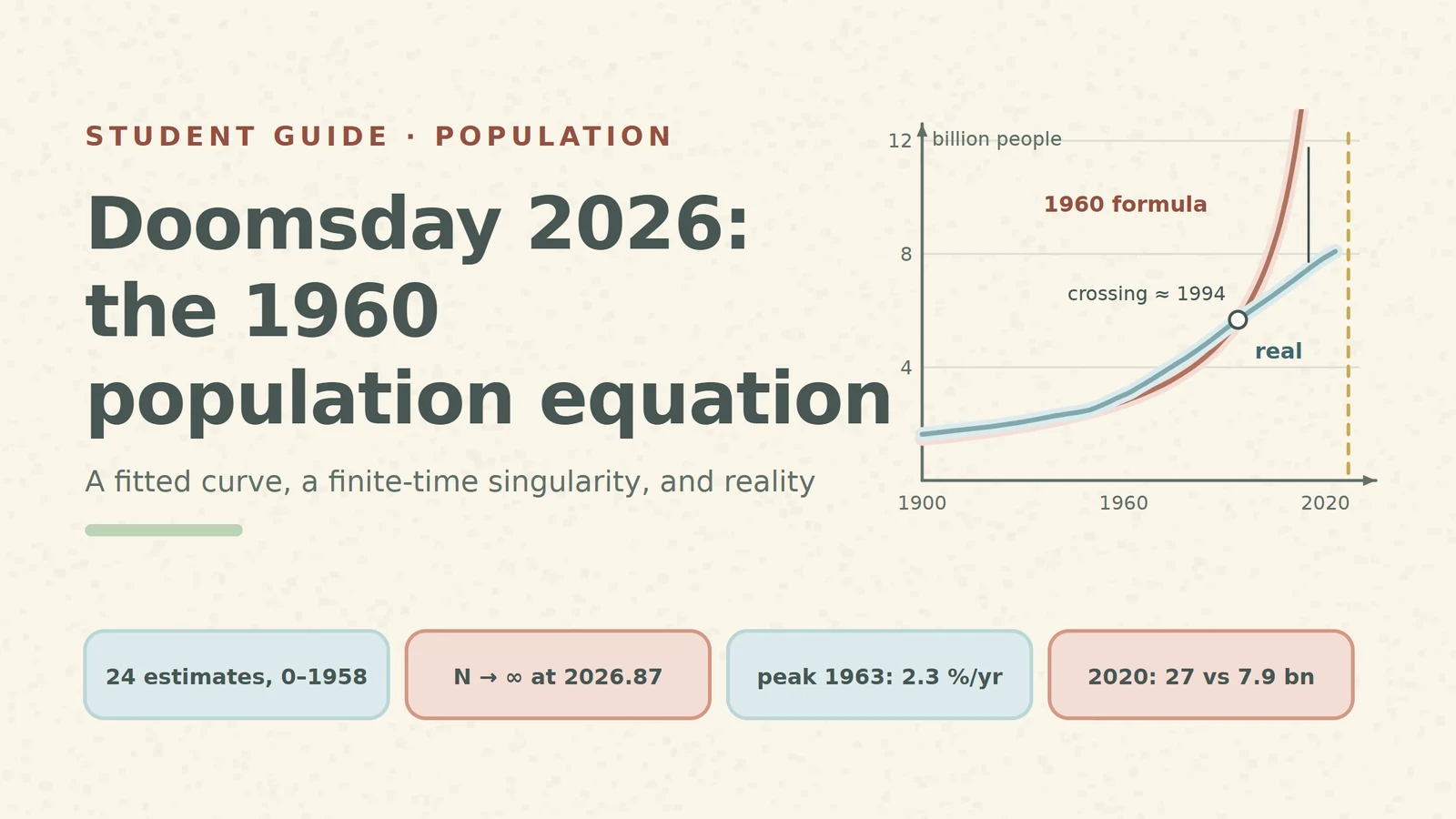
Doomsday, 13 November 2026: the 1960 equation that 'predicted' the end, and why it broke

In 1960 the journal Science printed a paper titled 'Doomsday: Friday, 13 November, A.D. 2026'. It was not a prophecy but a curve fitted to two thousand years of population estimates. What the curve says, why it blows up on a finite date, how the real world broke away from it, and what it teaches about extrapolation. For undergraduate and graduate students.

2026-11-09 · 8 min read

SOLAR CELL MANUFACTURING

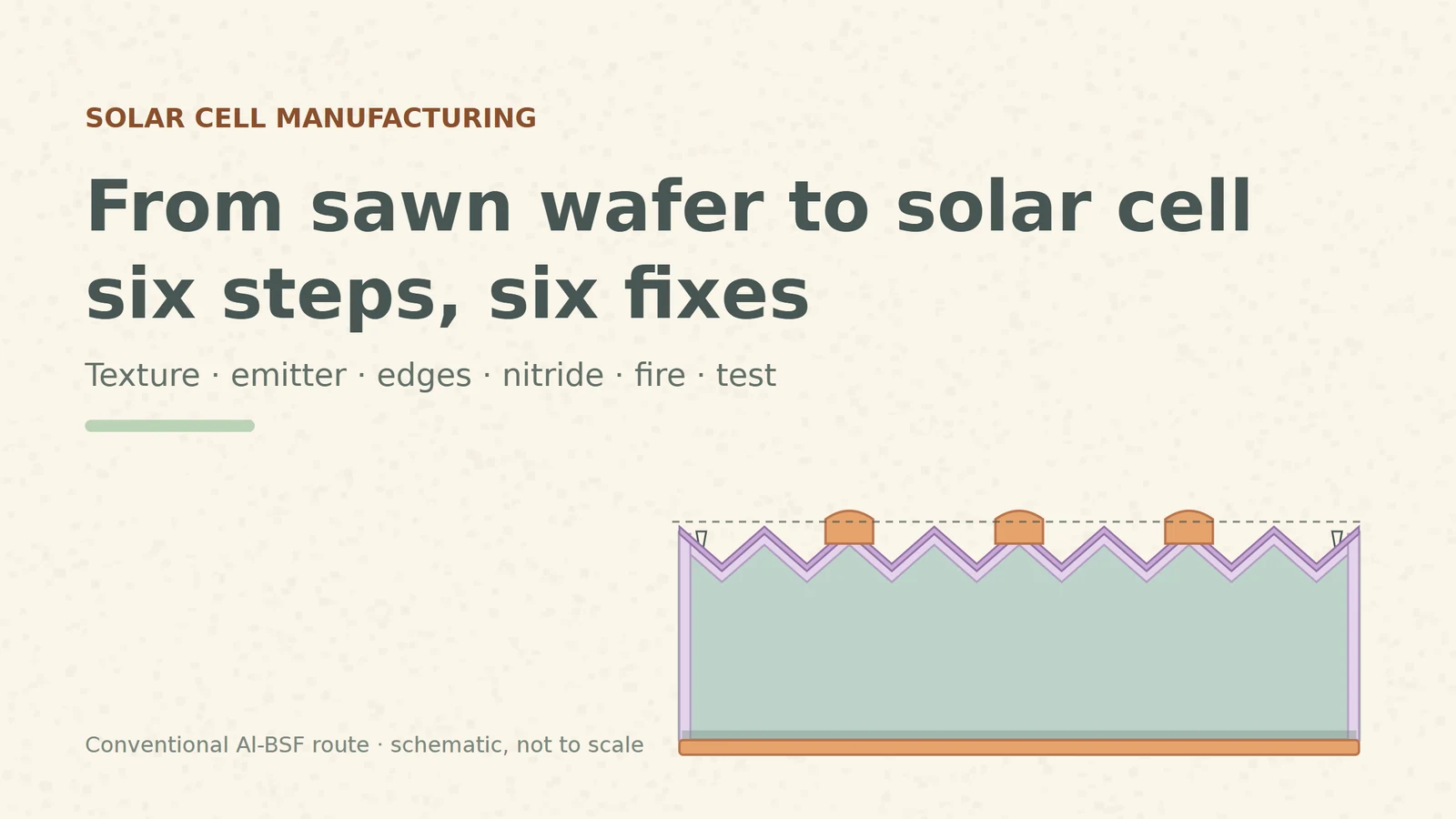
From sawn wafer to solar cell: six steps, and the loss each one fixes

A freshly sawn silicon wafer reflects about a third of the light that hits it and cannot deliver any current. Six factory steps change that: texture, emitter diffusion, cleaning and edge isolation, a nitride coating, printed and fired contacts, and a light test. This guide follows one cross-section through the conventional aluminium back-surface-field (Al-BSF) route and asks, for each step, which loss it removes. For undergraduate and graduate students.

2026-11-08 · 7 min read

SOLAR CELL MEASUREMENT

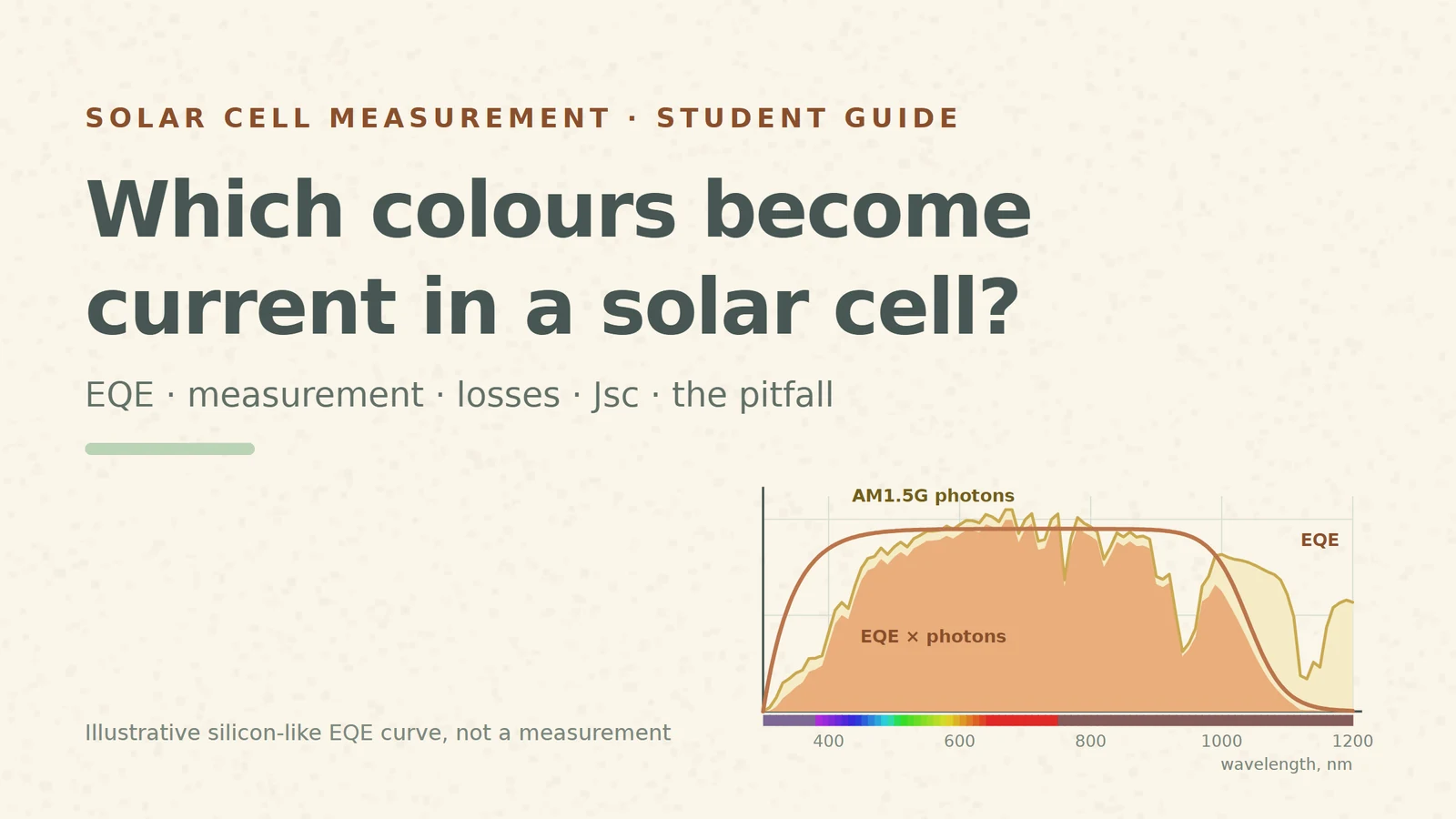
Quantum efficiency: which colours a solar cell turns into current, and how to read the curve

A J–V curve tells you how much current a cell gives under the whole spectrum. A quantum-efficiency curve tells you where that current comes from, one colour at a time: which photons are lost at the front, which at the back, and which never had a chance. How it is defined, how it is measured, how to read it, how to turn it into Jsc, and the one thing it is not. For undergraduate and graduate students.

2026-11-08 · 8 min read